














Active vs Passive Refrigerant Recovery
The active removal of refrigerant from a system using Refrigerant Recovery Machines makes the process much easier than using passive methods. The removal of refrigerant from a system that is being repaired or replaced is...

SmartLock Fitting Review
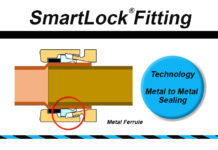
There is another ACR fitting available that eliminates brazing in refrigerant systems called the SmartLock fitting. We will review the SmartLock fitting vs Brazed fittings in this article.

The LOKRING fitting is a Pressfit fitting used for many applications within many industries. We will be looking at the LOKRING for its potential use with refrigerants in the VRF/VRV industry.
(Click here to Enlarge Lokring Infographic)
Share this Image On...

How do you increase individual control without adding additional indoor units? Daikin has a Zoning Kit that allows you to increase the amount of zones that are controlled by their own thermostat while using the same indoor...

Tenant Submetering
How do you bill tenants for their share of the use of a piece of air conditioning equipment that is shared amongst more than one tenant in your building? If you have a VRF Air Conditioning system, where...

VRF Wizard provides all information about Variable Refrigerant Flow (VRF) technology. We cover everything you need to know about installation, cost estimation, project tracking concerning VRF systems. Continue reading to learn what a VRF system is all about.
A VRF...

On August 13, 2020, the inventor and manufacturer of the original ZoomLock fittings – RLS, LLC – announced it was ending its relationship with Parker-Hannifin and will no longer supply its fittings to Parker to sell under...

The following Refrigerant Recovery Machines are listed in alphabetical order.
Appion G1 Review
Appion G1 Review
Appion G1 Features
• The Appion G1 is...

VRF Heat Pump or Heat Recovery (How to choose between a VRF Heat Pump or Heat Recovery System) or Packaged DX
Scroll to the bottom if you prefer to watch the video.

This formula will show you how to calculate the total heat transfer from a cooling coil. The calculation for this is as follows;
BTUH(t) = CFM x 4.5 x